Plush toys are more than just toys — they're comfort objects, bedroom decor, and thoughtful gifts that people hold close (literally). But over time, they collect dust, oils, and everyday dirt.
The problem? Most people are afraid to wash them. Nobody wants to pull a lumpy, misshapen stuffed animal out of the dryer.
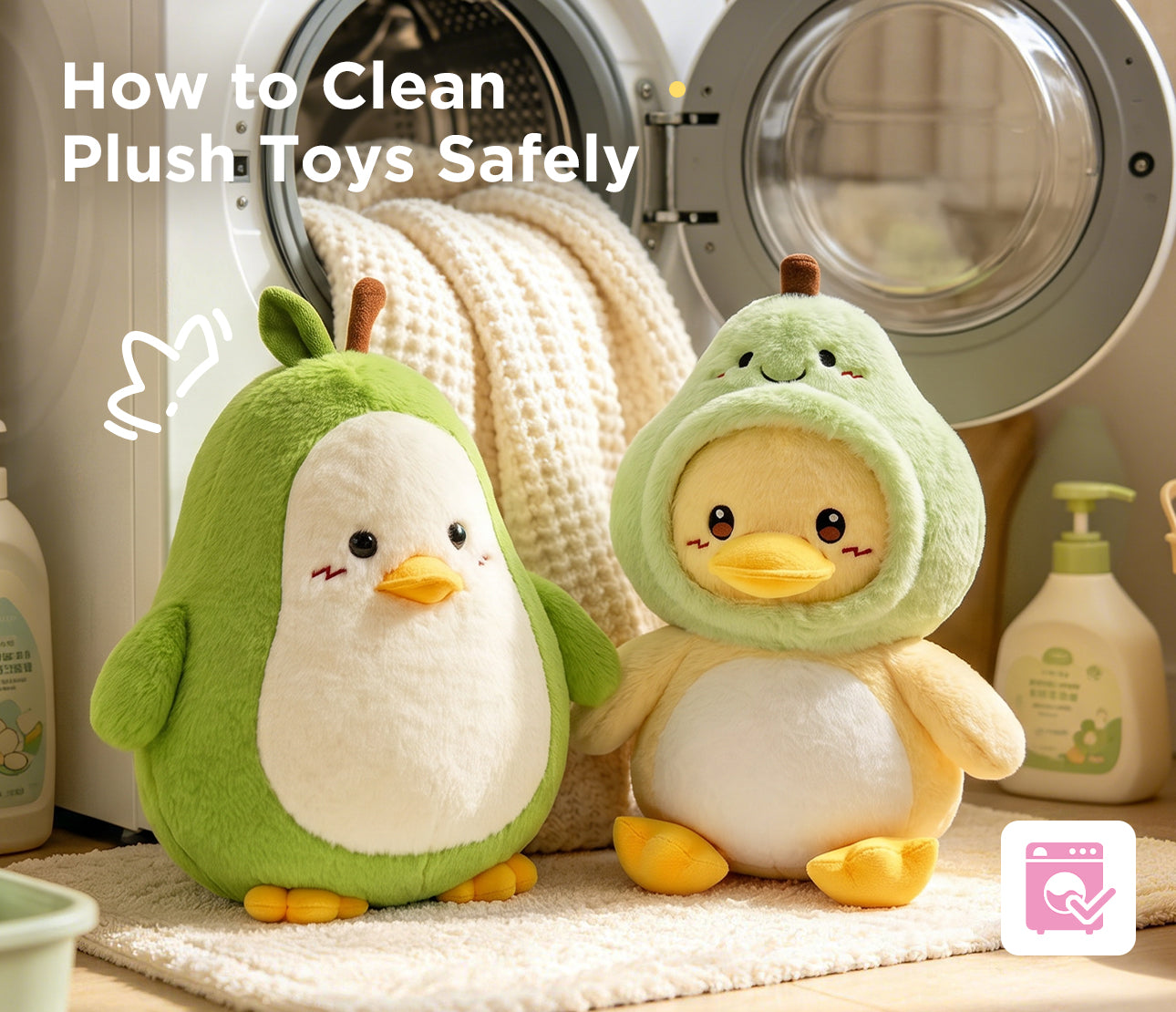
The good news is that cleaning plush toys is easier than you think, as long as you use the right method. In this guide, we'll walk you through everything you need to know — from checking the care label to choosing between machine washing and hand washing — so your plush toys stay soft, clean, and looking like new.

Before You Start: Check the Label
Before you toss any plush toy into the wash, always check the care label first.
Most plush toys will have a small tag with washing instructions sewn into the seam. Look for symbols or text that tell you:
- Whether the toy is machine washable
- The recommended water temperature
- Whether it's safe to tumble dry
If the label says "surface wash only", skip the washing machine and go straight to our spot cleaning section below.
If there's no label at all, the safest option is to hand wash or spot clean. It's always better to be gentle than to risk damaging the fabric or filling.
Quick tip:
If the plush toy has any of the following, do not machine wash it:
- Battery-operated parts or electronic sound boxes
- Glued-on accessories (like plastic eyes or sequins)
- Delicate fabrics like real wool or mohair
- Old or vintage construction
For these, hand washing or spot cleaning is the way to go.
Method 1: Machine Washing (For Durable Plush Toys)
If your plush toy is machine washable, this is the easiest method. Here's how to do it without causing any damage.
What you'll need:
- A mesh laundry bag or pillowcase
- Mild liquid detergent (free of bleach and harsh chemicals)
- A washing machine with a gentle/delicate cycle
Steps:
Step 1: Pre-treat any stains
If there are visible spots or stains, dab a small amount of mild detergent directly onto the area. Gently rub it in with your fingers or a soft cloth. Let it sit for 5–10 minutes before washing.
Step 2: Place the toy in a mesh laundry bag
This protects the toy from getting stretched, snagged, or tangled during the wash cycle. If you don't have a laundry bag, a clean pillowcase tied at the open end works just as well.
Step 3: Use a gentle cycle with cold water
Set your machine to the delicate or gentle cycle and use cold water. Hot water can cause colors to fade, fabric to shrink, or glue to loosen.
Step 4: Use a small amount of mild detergent
You don't need much — about half the amount you'd normally use for a small load. Avoid using fabric softener, as it can leave a residue on the toy's surface and make it feel greasy instead of fluffy.
Step 5: Run an extra rinse cycle (optional but recommended)
This helps make sure all the soap is washed out. Leftover detergent can make the toy stiff or attract dirt faster after cleaning.
Method 2: Hand Washing (The Safest Option)
Hand washing is the gentlest and safest way to clean most plush toys, especially if they're delicate, older, or have special details.
What you'll need:
- A clean basin or sink
- Lukewarm water
- Mild liquid detergent or baby shampoo
- A soft cloth or sponge
- A clean towel
Steps:
Step 1: Fill a basin with lukewarm water
Add a small amount of mild detergent or baby shampoo. Swirl the water gently to create a light lather.
Step 2: Submerge the plush toy
Place the toy in the water and gently press it down so it absorbs the soapy water. Avoid wringing, twisting, or scrubbing too hard — this can damage the fabric or distort the shape.
Step 3: Gently clean the surface
Use your hands or a soft cloth to lightly rub the surface, paying extra attention to any stained or dirty areas.
Step 4: Rinse thoroughly
Drain the soapy water and refill the basin with clean, cool water. Gently press the toy to release the soap. Repeat until the water runs clear and there's no soap residue left.
Step 5: Remove excess water
Press the toy gently between two clean towels to absorb as much water as possible. Do not wring or twist — this can damage the filling and change the toy's shape.
Method 3: Spot Cleaning (For Quick Touch-Ups)
Sometimes you don't need a full wash — maybe there's just a small stain or a dusty patch. That's when spot cleaning comes in handy.
What you'll need:
- A damp cloth or sponge
- Mild detergent or baby shampoo
- A dry towel
Steps:
Step 1: Mix a tiny amount of detergent with water on a damp cloth.
Step 2: Gently dab the stained area — don't rub aggressively, as this can spread the stain or damage the fabric.
Step 3: Use a separate clean, damp cloth to wipe away the soap.
Step 4: Pat the area dry with a towel and let it air dry completely.
This method is great for plush toys that can't be fully submerged — like those with electronic parts, music boxes, or glued-on decorations.
How to Dry Plush Toys Properly
Drying is just as important as washing. Improper drying can lead to mildew, bad odors, or clumpy filling.
Air drying (recommended):
- Gently reshape the toy while it's still damp.
- Place it on a clean, dry towel in a well-ventilated area.
- Avoid direct sunlight for extended periods — it can fade colors over time.
- Flip the toy occasionally so it dries evenly on all sides.
- Depending on the size, it may take 12–24 hours to fully dry.
Using a dryer (only if the label allows it):
- Use the lowest heat setting or a no-heat/air-fluff cycle.
- Place the toy inside a mesh laundry bag or pillowcase.
- Toss in a couple of clean tennis balls or dryer balls — this helps fluff up the filling and prevent clumping.
- Check frequently to avoid overheating.
Important:
Make sure the plush toy is completely dry before use or storage. Any remaining moisture trapped inside can cause mold or a musty smell.
How to Keep Plush Toys Clean Between Washes
You don't have to wash your plush toys every week. Here are some simple habits to keep them fresher for longer:
- Dust regularly. Give them a light shake or use a lint roller to remove surface dust.
- Keep them off the floor. Display them on shelves, beds, or in baskets to reduce dirt exposure.
- Rotate your display. If you have a collection, rotate which ones are out to reduce wear on any single toy.
- Use a fabric freshening spray. A light spritz of fabric-safe spray between washes can help keep them smelling fresh.
- Wash your hands before handling. This sounds simple, but oils and dirt from your hands are one of the biggest reasons plush toys get dirty over time.
How Often Should You Clean Plush Toys?
There's no strict rule, but here's a general guideline:
| Situation | Recommended Frequency |
|---|---|
| Plush toys used by children daily | Every 2–4 weeks |
| Plush toys used as bedroom decor | Every 1–3 months |
| Plush toys in storage or on display | Every 3–6 months or as needed |
| After illness | Wash immediately |
| New plush toy (just purchased) | Recommended to wash before first use |
If someone in your household has allergies, more frequent cleaning can help reduce dust mites and allergens that build up in the fabric.
Common Mistakes to Avoid
Even with good intentions, it's easy to accidentally damage a plush toy during cleaning. Watch out for these common mistakes:
- ❌ Using hot water — Can shrink fabric, fade colors, or melt glue.
- ❌ Using bleach or harsh detergent — Can damage fibers and discolor the toy.
- ❌ Wringing or twisting — Can distort the shape and ruin the filling.
- ❌ Putting electronics in water — Always remove batteries or sound boxes if possible before washing.
- ❌ Skipping the drying step — Storing a damp plush toy leads to mold and odor.
- ❌ Using high heat in the dryer — Can melt synthetic fibers or shrink the toy.
FAQ
Can I put plush toys in the washing machine?
Yes, many plush toys are machine washable. Use a mesh laundry bag, cold water, and a gentle cycle. Always check the care label first to be sure.
What detergent should I use?
Use a mild, fragrance-free liquid detergent. Baby shampoo also works well for hand washing. Avoid bleach, fabric softener, and anything with harsh chemicals.
Can I use a hair dryer to speed up drying?
It's not recommended. The concentrated heat can damage the fabric or melt synthetic fibers. Air drying or a low-heat tumble dry cycle is much safer.
How do I clean a plush toy that has a music box or battery pack inside?
Spot clean only. Use a damp cloth with a small amount of mild detergent, and avoid submerging the toy in water. If the electronic part is removable, take it out before washing.
My plush toy lost its fluffiness after washing. How do I fix it?
Try putting it in the dryer on a no-heat or low-heat setting with a few clean tennis balls or dryer balls. The tumbling action helps redistribute and fluff up the filling. You can also gently massage and reshape the toy by hand while it's still slightly damp.
Keep Your Plush Toys Soft, Clean, and Ready to Love
With the right method, cleaning your plush toys doesn't have to be stressful. Whether you machine wash, hand wash, or spot clean, the key is to be gentle, use mild products, and dry thoroughly.
A clean plush toy looks better, feels better, and lasts longer — whether it's a gift for someone special, a cozy addition to your bedroom, or a childhood favorite you want to keep around for years to come.
Looking for high-quality plush toys that are soft, giftable, and easy to care for?
👉 Browse our plush toy collection →
Show us how you wear yours! Tag @𝑶𝑳𝑨𝑶𝑳𝑨 and use #olaolaonesie — we want to see your beach crew. 🌴
If you have any questions, feel free to contact us:
Email: info@olaola.com
Follow us on social medias to find more information!
Facebook | Instagram | Tiktok | Youtube | Twitter | Pinterest
OLAOLA